It was built between 1721 & 1724 and Pevsner and Richard Morrice, in 'Stuart and Baroque' in 'The Buildings of Britain' series, credit the design to Thomas White who was the sculptor of the exuberant display of arms in the pediment. The three statues arranged around the main door are of Charles I, II and Queen Anne - a very public display of the city's support of the Royalist cause in the Civil War. Surprisingly the Guildhall was restored, in the 1870s, by that arch-goth Sir George Gilbert Scott, who did so much work at the cathedral, and it seems none the worse for it. The slightly lower side wings are a rather French in style, what with their chainage and all, and very stylish; as are the wrought iron gates and overthrow.
Showing posts with label Worcester. Show all posts
Monday, 1 August 2016
Worcester: The Guildhall
Without a doubt the most important secular building in Worcester is the sumptuous, Baroque Guildhall. Pevsner thought there was something barbaric about it, but I'm not so sure about that. I think it splendid.
Thursday, 16 June 2016
Worcester Cathedral II: The Interior
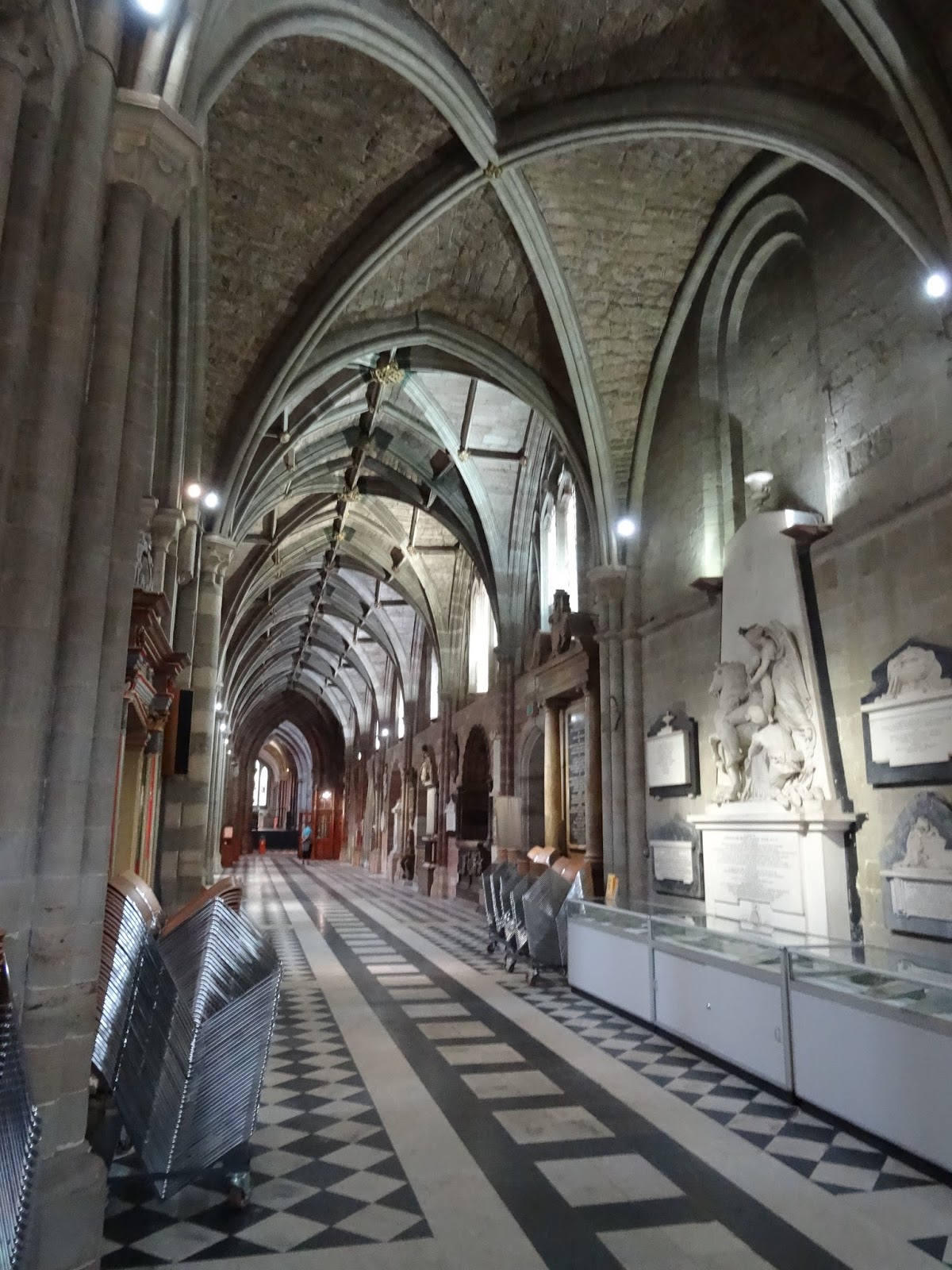
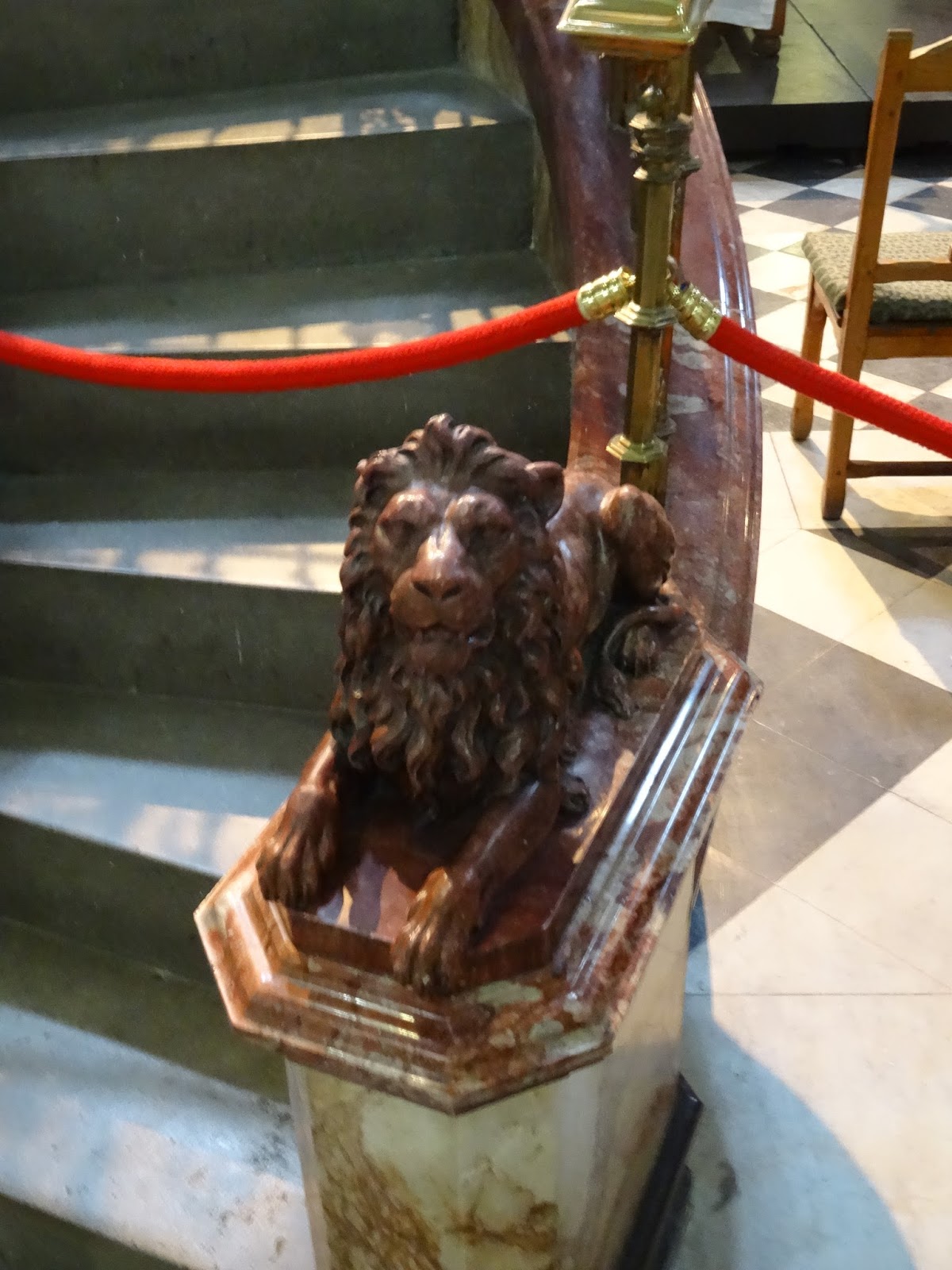
The interior of the cathedral is dim and cavernous. The furniture and decoration, which are mainly mid-Victorian, have an astonishing richness and opulence - encaustic tiles, marble, mosaic, metal-work and gilding that have turned the cathedral into a schatz-kammer - and are the work of Sir George Gilbert Scott. I particularly like the inlaid cross on the back face of the High Altar reredos. In all the sort of work that earned the opprobrium of later architectural critics such as Alec Clifton Taylor who hated it all, and longed for its removal as had by then already happened at Salisbury. There is work too by that master of the Late Gothic Revival, George Frederick Bodley. Amongst the many tombs and monuments are two royal burials: King John and Prince Arthur (the eldest son of Henry VII).
Wednesday, 15 June 2016
Worcester Cathedral I: The Exterior and the Close
Over to Worcestershire on Monday to visit family. Yesterday we drove over to Worcester for the day. Our first port-of-call was the Cathedral. I won't bore with a history of the building - it's very long and very complex. Here, instead, is what took my fancy, starting with the exterior of the cathedral (nearly all Victorian and later stonework - the Cathedral is built of a highly friable sandstone) and the surrounding close.
It is a mistake to think that all English cathedrals are surrounded by wide lawns and cedar trees in the manner of Salisbury. Worcester is quite hemmed in with buildings and was more so in the Middle Ages, with a parish church, bell-tower and charnel chapel on the north side and the monastic buildings on the south. There was also a large Guesten Hall on the south side of the cathedral that survived until the nineteenth century when it was demolished and the great timber roof used as the nave roof at the new church of Holy Trinity in the city, before ending up at the Avoncroft Museum at Stoke Prior. Damage was done to the north end of the close in the 19th century when a road was pushed through, and in the 1960s the medieval Lychgate (the entrance to the close for funerals) was demolished for a new dual carriageway and redevelopment. Here's what's left, with a couple of views of streets just outside the close.
Labels:
architecture,
cathedrals,
churches,
England,
Worcester,
Worcester Cathedral,
Worcestershire
Subscribe to:
Posts (Atom)