Showing posts with label Lincoln. Show all posts

Tuesday, 9 August 2016

Lincoln

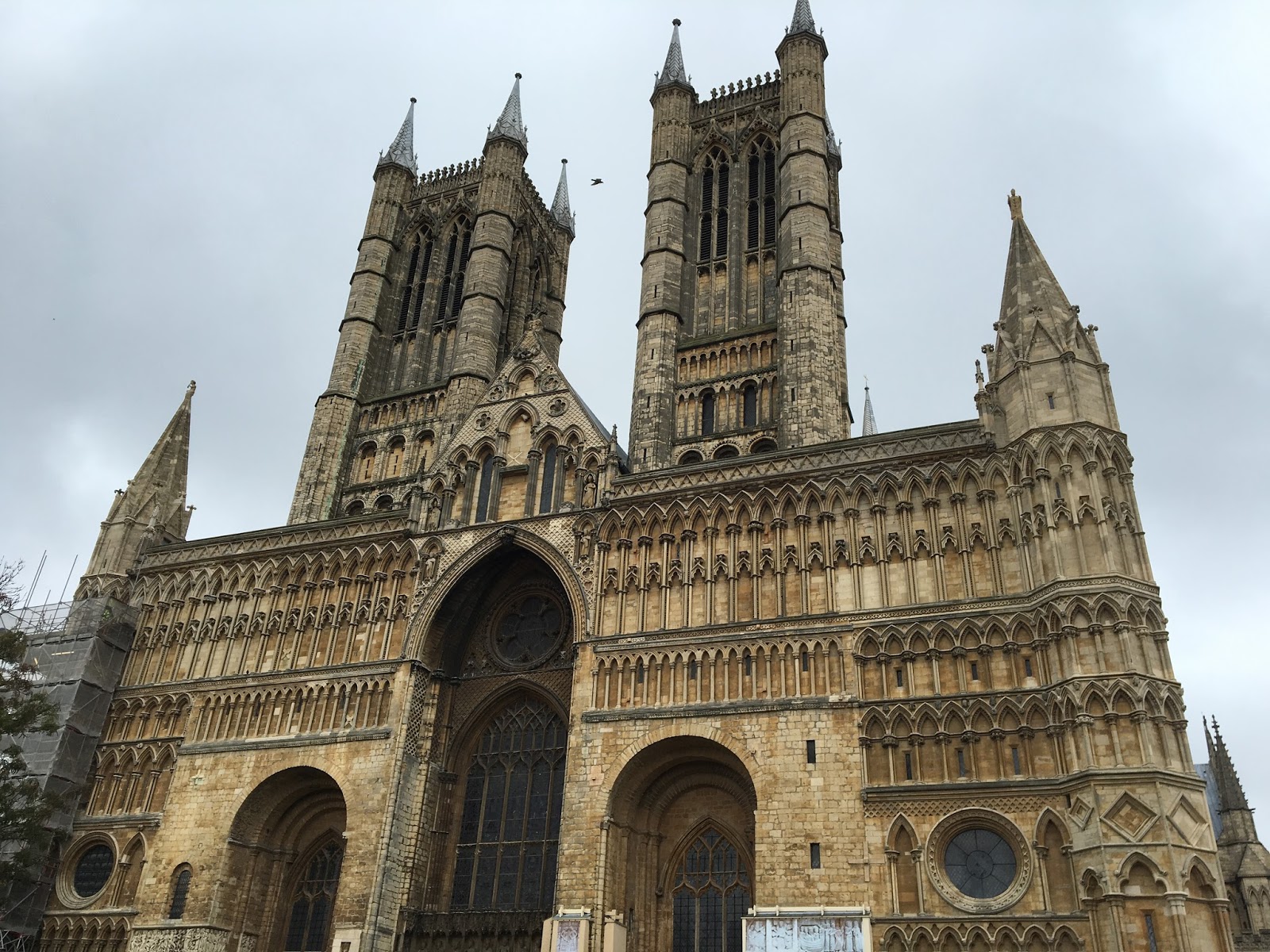
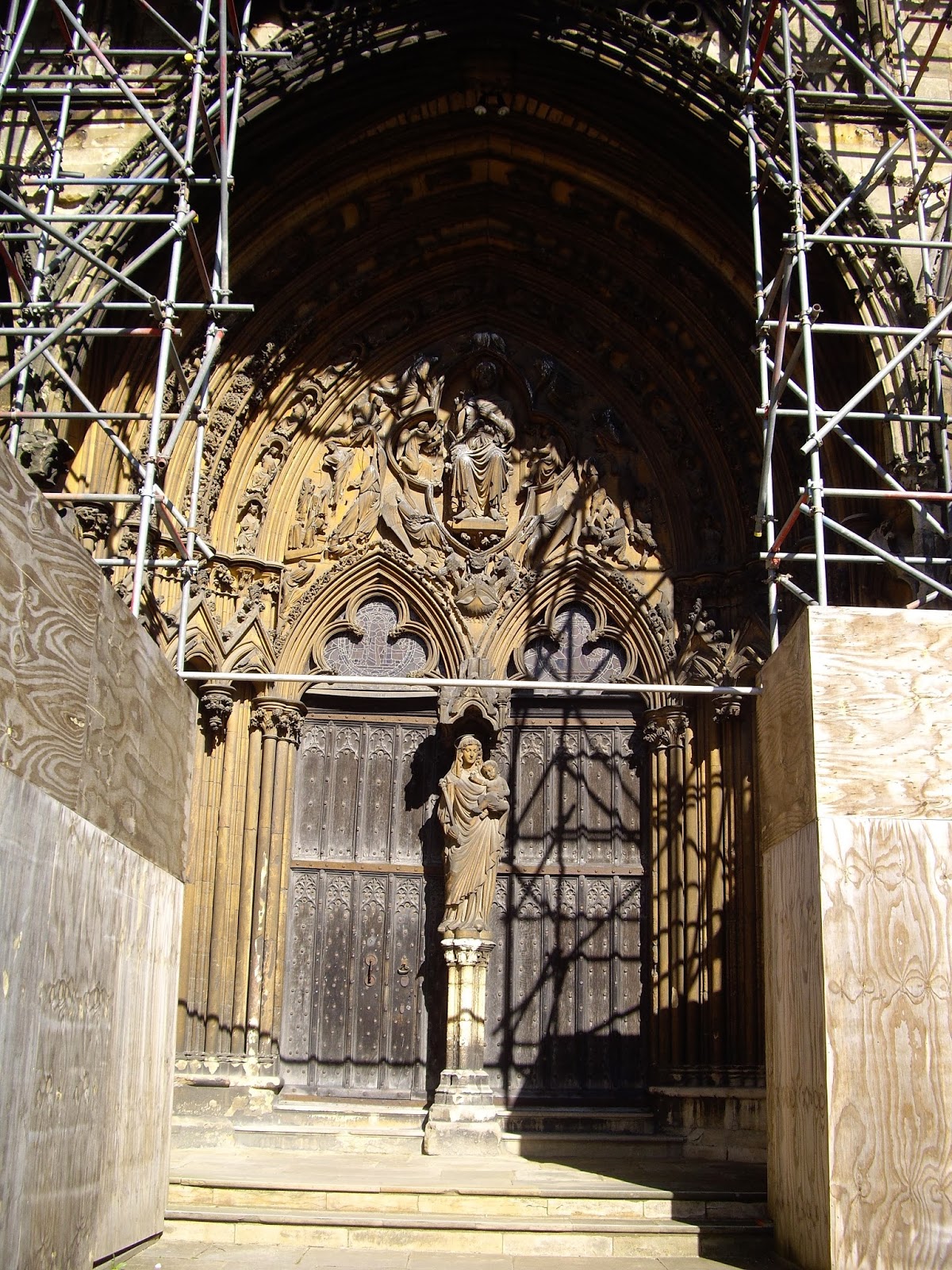
      Some photos I took on my last visit to my county town.


Wednesday, 5 August 2015

Works on Paper: Three Exhibitions at the Fitzilliam Museum, Cambridge

   To Cambridge on Friday and three concurrent exhibitions at the Fitzwilliam Museum.  (There is a fourth: 'Treasured Possessions' which the bf and I saw last month.  Some wonderful objects but a little diffuse.)  All three are about work on paper; watercolour and printmaking.  And all three are outstanding exhibitions; the works on display all taken from the Museum's own rich collection of work.  
   The largest of the three, 'Watercolour:  Elements of Nature' is a brisk exploration of the use of watercolour as a medium from the Renaissance (the most amazing miniatures) to the 20th century. (I did the exhibition in reverse, but the experience was none the worse for that.) Watercolour is often seen as the British medium, not surprisingly then the majority of work on display comes from these Isles. All the famous names are there: Turner, Girtin, De Wint, Cotman, Palmer.  The last was represented by one work: 'The Magical Apple Tree' c 1830, a work of visionary intensity, shining out like an icon.  An equally intense vision was offered to us by Ruskin who is represented here by four works. 'In the Pass of Killiekrankie' is a master work; incredibly small (I didn't realize how small)  and worked in a way that seemed to link it with the Elizabethan miniatures that open the show.  Superb.  Not enough is made of Ruskin the artist.  Poor chap only seems to be remembered these days for his sex life, or lack thereof.    
   Next to Ruskin's work Seargeant's three, sun drenched watercolours seem facile.  The only real disappointment were the watercolours by Pissarro.  They really were poor.  A little disappointed too, if I'm honest, with the Paul Nash, as I admire deeply his oils and am drawn to his ideas.
   Across the landing is the second watercolour exhibition: 'Ruskin's Turner's', that is the twenty-five Turner watercolours Ruskin bequeathed to Cambridge University to inspire the students. Lucky students, as this is another schatzkammer of good things.  It is rare opportunity to see these works together as Ruskin, concerned about the conservation of these wonders, laid down strictures about their display.  And wonders they are: small, vibrant and intense and altogether very beautiful.
   Finally 'Designed to Impress; Highlights from the Print Collection' and like 'Watercolour: Elements of Nature' a lightning journey through the history of the print form the Renaissance to the present day.  The work on display is of an equal quality to the other two exhibitions.  There is work by Durer - the famous 'Melancholia I' - Rubens, Blake, Wadsworth and Munch among others. There seems to be an emphasis on the grotesque and the strange - though that is not a negative criticism. Something uncanny, even occult. The highlights however for me were a Rubens, and, surprisingly for I didn't know he was also an artist, a work by the Royalist champion Prince Rupert of the Rhine.  A work of real quality.

   It has been a week of Turners in fact.  The bf and I were in Lincoln on Tuesday and we did a summary tour of the Usher Gallery where there are two exhibitions running: 'Lincolnshire's Great Exhibition' and 'Picture the Poet'.  In addition to works by Lowry and Stubbs there is Turner's famous watercolour of Stamford.  A second visit, I think, is required.


Wednesday, 10 September 2014

The Usher Gallery, Lincoln

   To Lincoln yesterday on a rattletrap bus. A lovely late summer's day.  I thought I'd share these pictures of the Usher Gallery, Lincoln, and Lincolnshire's, most important gallery.  I think you could say that it holds the county's collection of art.
  There's a good collection of applied arts: porcelain, clocks and watches.  It holds one important Piper oil, an atmospheric watercolour by Andrew Wyeth and some lovely work by Clausen - his small oil of an orchard is particularly fine.  I surprised I should like that sort of thing - I usually find much of British Post-Impressionism sentimental. There is also a really good collection of Peter De Wints (1784 - 1849) and other 18th & 19th century watercolourists connected with county.
   The building was erected in 1924, a design of Sir Reginald Blomfield.  One of his better buildings, I think - I'm not great fan of his work - it is compact and well detailed, influenced both by English Baroque and early French Neo-classicism.
   From an Arts and Crafts beginning Blomfield, like Lutyens and many others, went on to design in the Grand Manner on a large scale, of which the Usher Gallery is a well-mannered and bijou example.  (I do love Victorian and Edwardian architecture, but I often find the overblown scale of some it, for instance in the work of Sir Richard Norman Shaw, really off-putting.  It's just too overpowering.)   Blomfield in his later career produced some really monstrous buildings like the Quadrant, Regent St (albeit he did have to incorporate the rear façade of Shaw's elephantine Piccadilly Hotel) and the Headrow Leeds.  And there are his proposals for Carlton House Terrace overlooking the Mall, in London.  Thankfully the Nash Terraces survive...
   The odd thing is that architects like Blomfield, a Classicist, could be such a vandal, while early-Modernists like J M Richards such committed conservationists.  Another blot on Blomfield's copy-book is his partial responsibility for the (British) electricity pylon!  (Look closely at one; it's actually an obelisk...) 
   That said The Usher Gallery is a rather fine building. And he didn't like English Neo-Palladianism.  So he evidently got some things right.


Addendum

I forgot to mention that Blomfield was a prolific writer on architecture, producing a number of histories on English and French architecture.  He is perhaps, however, best remembered for his seminal book 'The Formal Garden' with its ravishing pen and ink illustrations by Francis Inigo Thomas.  I like them almost as much as I like the work of FL Griggs.  Thomas was no mean garden designer himself; he was designer of the exquisite Arts and Crafts gardens at Athelhampton.

Wednesday, 19 August 2009

Cathedral Quarter

     More madness from Lincoln...

     Not content with the new cultural quarter in Lincoln, the 'Uphill' area of Lincoln - the ancient 'Bail' and not quite so ancient 'Close' - has been renamed the 'Cathedral Quarter'....in fact the 'Bail' - the part of the City that lies within the walls of the Roman upper city - has be known by that name for the best part of a thousand years. Up until the 'reforms' of the nineteenth century it lay outside the jurisdiction of the City; being the outer bailey of Lincoln castle it was under the authority of the Duchy of Lancaster and was administered by a Steward and Court Leet. The 'Close', which encircles the Cathedral, was a later division of the City and formed a fortified enclosure for the protection of both the cathedral and its staff; two of the gates survive, another is a Regency/Victorian 'creation'. It was administered by the Dean and Chapter via a Court Leet that met within the Galilee porch of the cathedral.

Sunday, 16 August 2009

Cultural Quarter? Cultural ghetto....

     Apologies for not having blogged for a while (he says euphemistically!) but life has been getting in the way of late....

     In my time away from this blog I have made two trips up to Lincoln - my county town. I knew it had a 'masterplan', but little idea that it involved the creation of a 'Cultural Quarter'. I find I really hate such designations...all it does, in effe
ct is to create a cultural ghetto, perhaps planners and the City fathers of Lincoln believe that artists should be corralled away somewhere safe, where an ever watchful eye can be kept on them? Not that I believe that artists are in anyway as 'subversive' as the avant garde, or liberal intelligentsia, would have us believe, or wish they were....
     Still it seems to be to just another case of all that loopy post-war planning that did so much untold damage to our historical cities....shopping here, working there, sleeping somewhere else. It is merely the same old stuff dressed up in fashionable planning talk....if the arts are to mean anything in being the leaven in the lives of the inhabitants of Lincoln, or any other city, museums etc have to be spread throughout the whole. Public sculpture, for instance, and especially that of an official nature, should be placed everywhere in the city. Institutions too. For it is through them that civil society is created and maintained. To create a 'cultural quarter' is to impose a form of segregation upon the city, to create an area that is tourist destination in a world view that sees and cultural 'product' simply as that - product, something to be merely consumed like something on a shelf in a shop, not something that conveys higher meaning, or even spiritual value for those who use art as a god substitute.
     I remember standing at the end of Danes Terrace and looking down Danesgate past both The Collection and the far more lovely Usher Gallery and not seeing a soul, the place was dead...not vibrant, not living, just a quiet English provincial town. Dead.
     Reading Lincoln City council material on the web I see that the Library and Drill Hall are also part of the 'Cultural Quarter' even though there is no visual link between them and the Danes Terrace area, and therefore no direct pedestrian route. This is ludicrous. They are two separate quarters not one. Apart from the general vacuity of 'The Collection' - the building is what it's about, not the contents, the move up hill has left the old museum empty - what a waste. This is no way to re-construct a city.