Showing posts with label Tenby. Show all posts

Wednesday, 15 October 2025

Tenby

      The bf's birthday yesterday and we decided, last minute, to take the train to Tenby.  Rather cold, but fine.  Lovely lunch.  Some photos for you.  Doors mainly.


Saturday, 16 November 2024

St Mary the Virgin, Tenby

      A welcome return to Tenby. A glorious day full of sunshine, and serenity.  The ancient streets of the tightly-packed town centre had a sense of all pervading calm, rather like a cathedral close or an Oxbridge college.

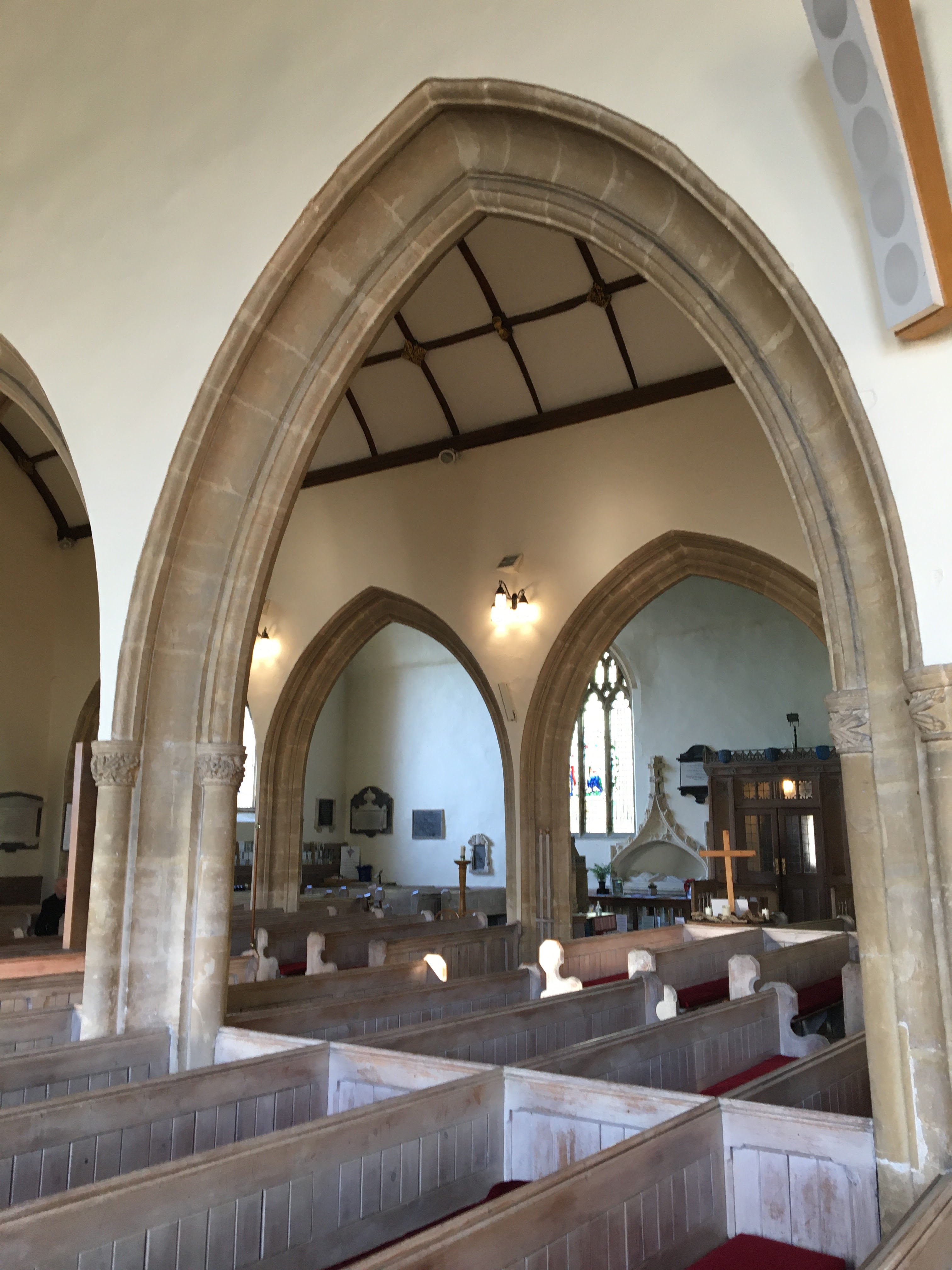
     St Mary's church sits at the centre of the old town, on what is likely to be an ancient site.  It is mainly a Late Medieval structure - a rebuilding and enlarging of the original of which only the tower, tall and gaunt, really survives.  Its stands, unusually on the s side of the chancel. The equally gaunt spire, based on that in Bridgewater, Somerset, is Late Medieval.  St Mary's is a large church for Medieval Wales, built with mercantile wealth.  Rubble masonry w Bath Stone (?) details.  Apart from tower, Perpendicular Gothic throughout.  Nave and aisles and very long chancel with n chapel (St Nicholas/Aisle of the grace of the Holy Rood), and tower and large chapel to the s (St Thomas, tho' the Inventory of the Ancient Monuments of Wales (1911) calls it 'St Anne's chapel').  Porches to s & n of nave. N porch Victorian.  Large, cruciform w porch demolished in 1817.  Ruins of former College of Priests to w of church.

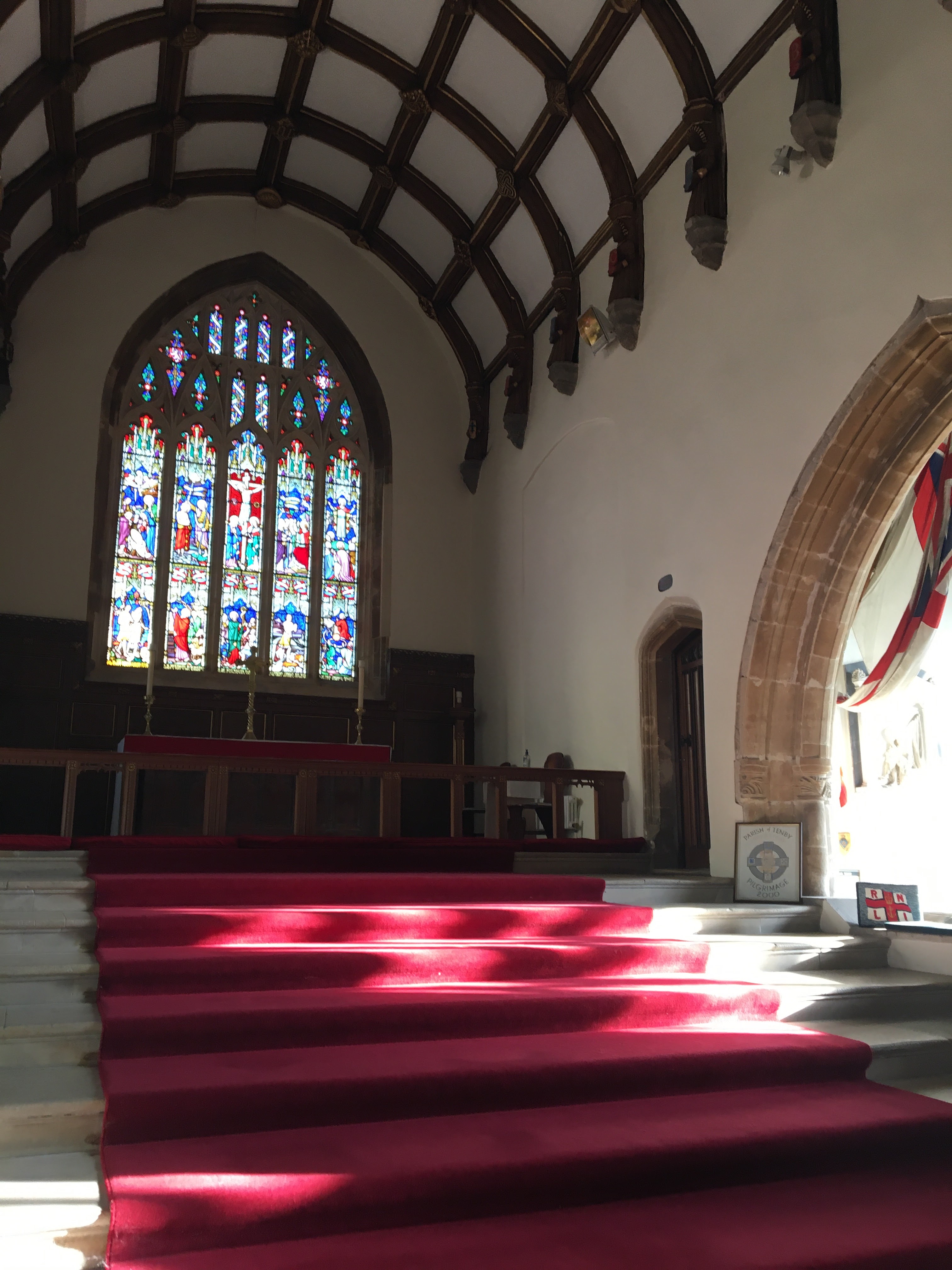
     The interior is vast, spacious and on Thursday afternoon filled with the clear, slanting light of approaching winter. The overall effect in the nave is rather like a hall-church.  Nave has original wooden wagon roof, like a wooden barrel vault - aisles open wooden roofs, Victorian by the look of it.  The church was restored twice in the 19th century: 1862-66 & 1885. The s aisle is exceptionally large, nearly as wide as nave and n aisle combined.  Somerset type piers are short and widely spaced.  (n & s arcades are of different design; the s has foliage capitals, the n none.)
     The chancel has a tiny clearstory, somehow squeezed between wall and wagon roof.  The latter is quite the design with a series of large figures of angels along the base. High Altar raised high on steps; below is the crypt chapel of Jesus.  The n & s chancel chapels are trapezoid in shape, tapering to the east - Aisle of the Grace of the Holy Rood noticeably so. Both have wagon roofs which have been repainted. 
     All the wood work has been limed. The church rich in monuments and memorials. 

     Geraldus Cambrensis, Gerald of Wales, scholar and writer, was rector here in the early 13th century.






Friday, 24 May 2024

Tenby

     Yesterday a respite from the Infernal City and a welcome return visit to Tenby.  Tenby is a small marvel, and one of our better seaside resorts. A 'must visit' sort of a place; with some fine urbanism and architecture.  It is built on a dramatic promontory jutting out into the Bristol Channel, and retains its medieval walls, the result is a tightly packed, and visually satisfying urban environment with all sorts of alleyways leading off the main streets, and the tower and spire of St Mary's church sailing over all, for all the world like an escapee from Ireland or Scotland.  As always, although loving the various colours of the buildings, I'm struck by the use of slate hanging.  There is something rather satisfying in its use.*
     In the original iteration of this post I erroneously stated that Tenby was the birthplace of Myfanwy Piper (nee Evans), critic and librettist (she collaborated with Benjamin Britten, Alan Hoddinott, and Malcolm Williamson), 2nd wife of the artist John Piper and muse to Sir John Betjeman.  She was actually born in London in 1911.  Her paternal grandfather was a minster in Tenby, and she spent summers in the town as a child.  (She had a connection to my own county, Lincolnshire, in her maternal grandfather, Charles Playll, a minister in Louth.)  She really deserves a blogpost of her own.

     Lunch was taken at the atmospheric Plantagenet House Restaurant on Quay Hill.  Delicious food, attentive staff.  In all, very good.


* 6.5.25 A lot of the old town is a fascinating, and piquant, combination of Medieval urbanism and smartest Neo-classicism.