Monday, 9 January 2017

Market Deeping

   St Guthlac's proud tower looks south down Church Street - towards the Market Place and the stone bridge over the river Welland. This is the very southern edge of Lincolnshire. The street is broad with wide grass verges, and is lined with mostly stone, mostly 18th century, houses.  None are particularly outstanding but all contribute to a satisfying whole - think orchestral players not soloists.  It is all very pleasant, having a quality that is somewhere between the villagey and the urban.
   However Deeping still suffers visually from the period when the A15 thundered through. In fact, like Bourne just a few miles north, Market Deeping feels as though it is place to pass through rather than a destination, which, I think, is a shame.  In the same manner Deeping suffers from Lincolnshire's great and abiding sin of utilitarianism. It looks timeless but has suffered a lot from Modernity: in the late 19th/early 20th century The Old Wake Hall, a medieval manor house just north of the church was demolished; in WWII the village pond was filled in; Halfleet that leads north from the church has been badly filled-in with suburban housing.
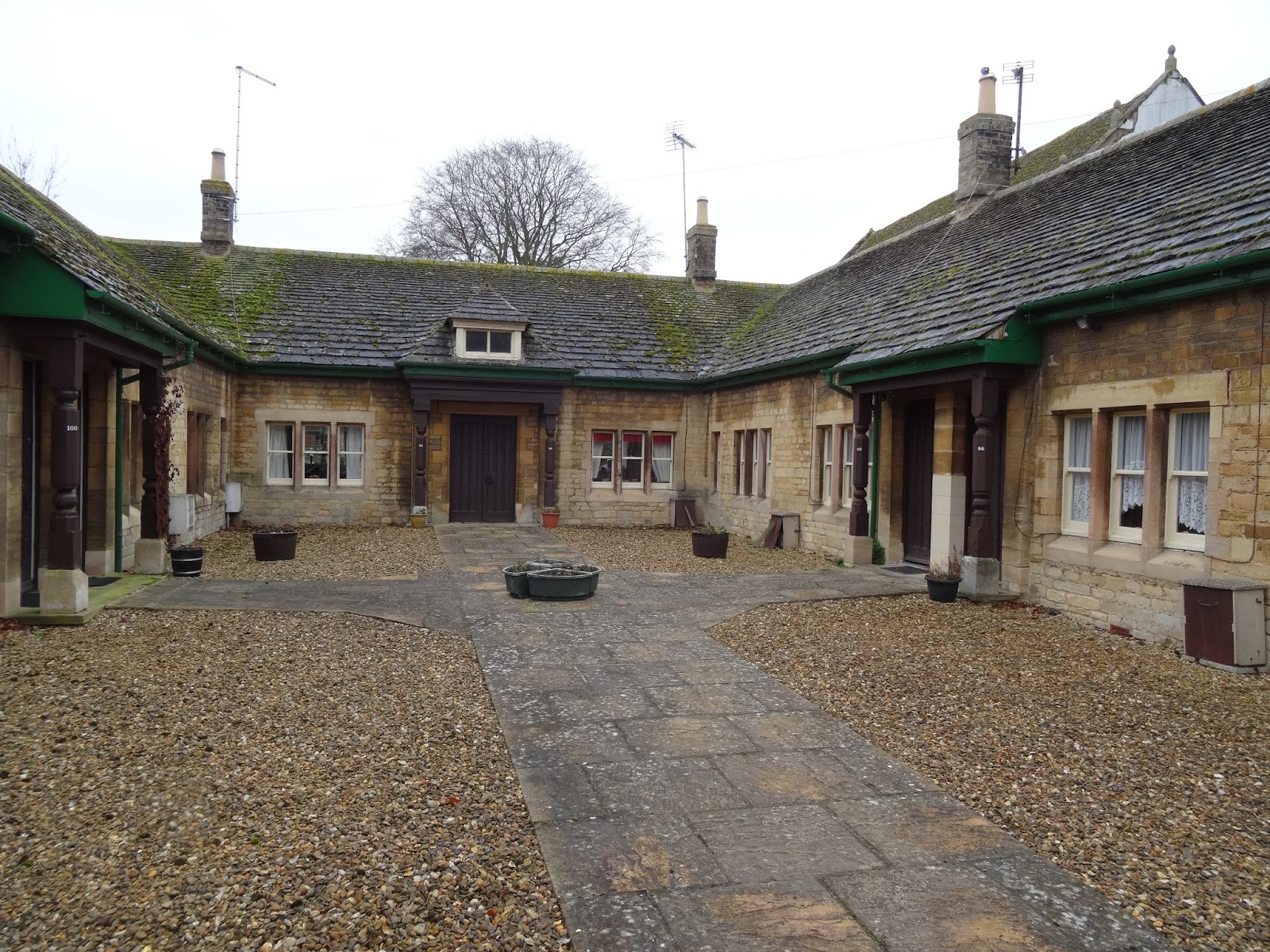
   The Market Place - roughly triangular, runs E-W parallel with the river, and is lined with grander buildings, some of them quite urban in scale.  The rather charming Town Hall is by Thomas Pilkington of Bourne and dates from 1835; the alms houses in Church Street are by Edward Browning (we've encountered him before) and date from 1877.


Saturday, 7 January 2017

St Guthlac, Market Deeping

   Yesterday, the Feast of the Epiphany, I braved the cold and the damp to visit the small market town of Market Deeping and the parish church of St Guthlac.  It was my first look inside.  It is a small, low slung building; the nave (Early English arcades and Perp clerestory) darkened with late Victorian and early 20th century stained & painted glass.  The chancel in contrast is light filled, where the best glass is to be found in two of the south windows. The walls of both nave and chancel have been scraped down to the bare stone, probably when the church underwent restoration in 1872 under the stern hand of James Fowler of Louth who we have encountered before at Gunby. The Wake chapel on the north of the chancel is now the organ loft.  Perhaps then, a bit of a disappointment. Exterior is however graced by a strong Late Medieval west tower, which with its crisp ashlar stands in immaculate contrast to the humble rubble built walls of the rest of the church.  I suspect that the tower was built under the patronage of that remarkable woman Lady Margaret Beaufort, Lady of the Deepings, mother of Henry VII, grandmother of Henry VIII and descendant of the Wakes. There is, on the s face, a Tudor portcullis.
   The porch contains a really quite beautiful set of nineteenth cast iron gates by Colemans, the local iron founders, and the churchyard gates too are quite fine, though not quite so nice.


Saturday, 24 December 2016

Seasons Greetings


A

Merry Christmas

and 

Happy New Year

 to you all


Tuesday, 20 December 2016

Own work: Life drawing XXXI

   Finally, after a delay of nearly two weeks, posting the single drawing done on the life drawing session before Christmas - a single pose for 2hrs.


Monday, 5 December 2016

Birmingham: St Chad's cathedral

   Birmingham has suffered a lot in the 20th century from rapacious Modernity.  The centre is scarred by arterial roads and ill considered developments.  This was illustrated pretty well in the City Museum and Art Gallery where there were two schemes on display from the Midcentury: a great model of the Beaux Arts Centenary Square off Broad St, and a drawing (a rather good one at that) of a suburban tower block development.  The former looked as though it was a refugee from the Third Reich and the latter like it was attempting an impersonation of the Karl Marx Allee in the former East Berlin. Neither scheme seemed to have anything to do with character of the city.  Were we so unsure of ourselves that we had to ape the urban forms of Totalitarian Modernity?

   The area around St Chad's Cathedral (1839-41, and early work by A W N Pugin) is a practical illustration of my point.  Pugin designed St Chad's to fit into a tight, dense urban context of narrow streets; it was not designed to be seen, as now, across dual carriageways and open space.  And that's why it looks oh-so-slightly disappointing.  However in his materials - brick and sandstone - Pugin acknowledges the genius loci, though the design has a sort of North German feel to it as though it was designed not for a canal-side in the English Midlands but the side of the Baltic.  Apart from the façade the outside is plain, even frugal: few mouldings and fewer buttresses.  As I've said this partly from the fact that it was not really designed for public exposure, but also, I think, for the sake of economy.  No English Medieval church of this scale would be quite so parsimonious.  Still the mass and grouping of the liturgical east end is quite dramatic, verging on the sublime.
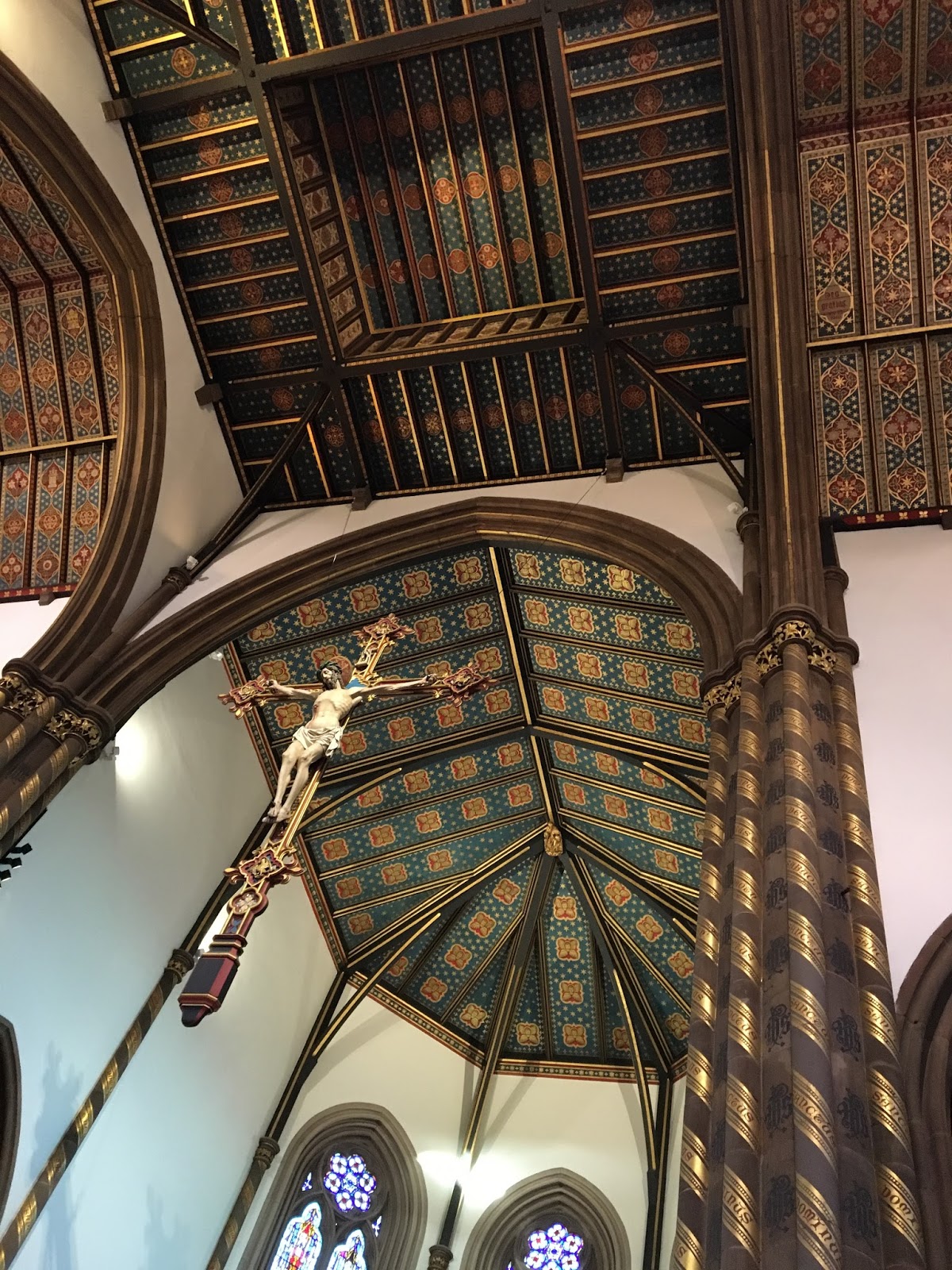
The interior is something else, a sort of hollowing out of the dense early Victorian city fabric to create a soaring numinous space in which to encounter the divine.  The sandstone columns are very attenuated; the whole space has a sort of delicacy and fragility.  Again Pugin works with incredible economy.  There are great vast acres of flat wall surface, contrasting with flashes of rich detail.  The fragility extends to the roofs, which have a thinness typical of his work.  A medieval roof would be massive in comparison.
   Again rapacious Modernity has been at work inside as well as out, denuding the interior of a number of Pugin's rich furnishings.  The greatest loss is the Rood screen which is now happily in Holy Trinity, Reading (an Anglican church, though decidedly on the High side of things).  Interestingly Pugin partly furnished St Chad's with architectural antiques such as the German Late Gothic/Early Renaissance pulpit.
   The SW chapel is a very sensitive addition dating from the 1930s by S P Powell.


Saturday, 3 December 2016

Birmingham

     The bf and I went over to Birmingham on Wednesday to visit my family.  It was the bf's first proper visit.  We kicked things off with the City Museum and Art Gallery.  It has a fantastic collection of Pre-Raphaelite art, along with an outstanding collection of applied and decorative arts. The gallery itself is an opulent Victorian Renaissance style, part of the Council House designed by Yeoville Thomason.  West, over Edmund Street is a huge Edwardian Baroque extension by Ashley and Newman, connected to the original galleries by a massively rusticated bridge rich in sculpture.  The whole complex is really worth a visit.
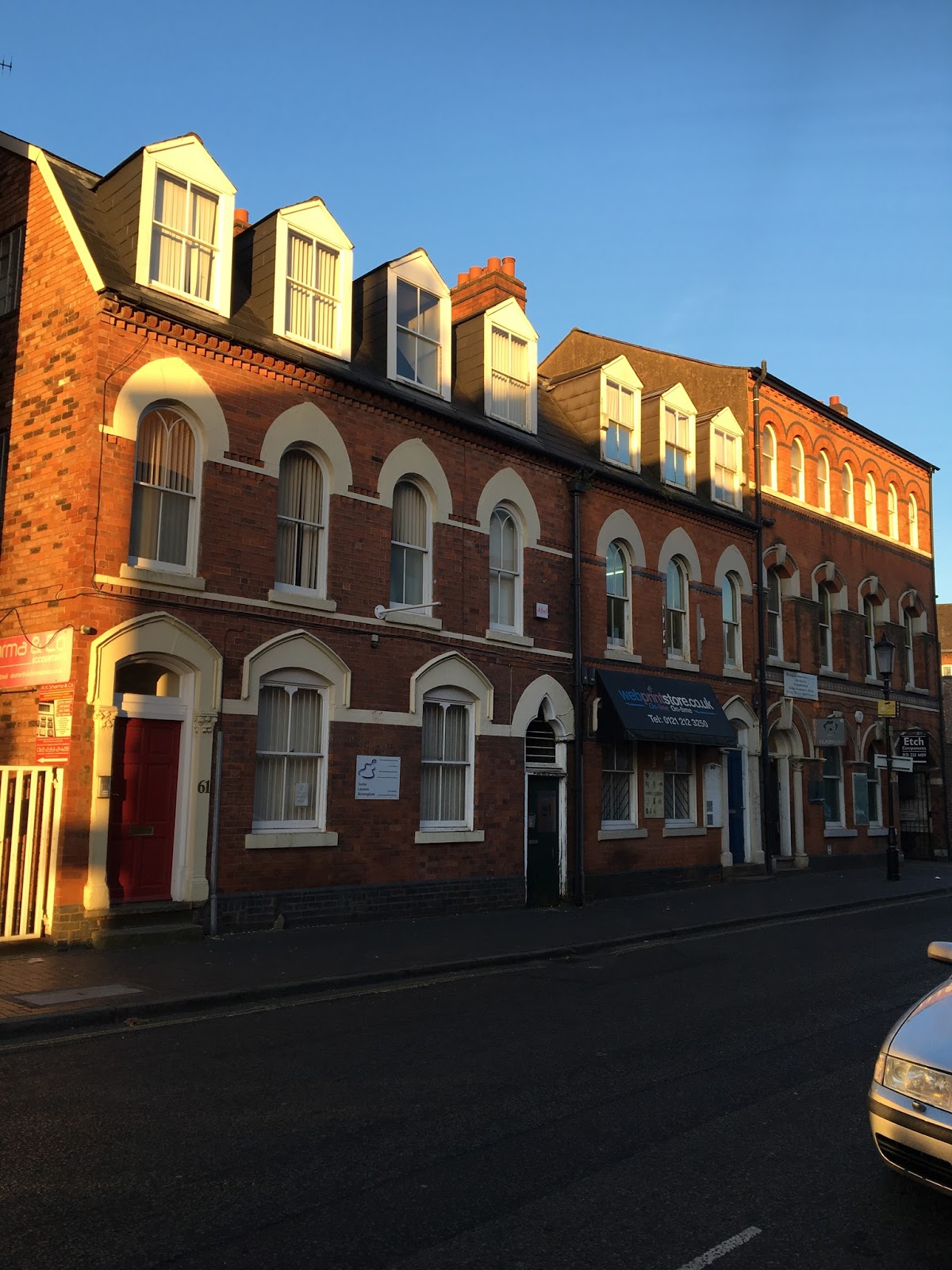
     The next morning we had a brief explore of the Jewelry Quarter before getting the train home.  Originally a Georgian suburb of the city it was slowly colonized by small scale manufacturing during the 19th century, esp the jewelry trade.  The buildings are an interesting mix of the original houses with 19th & 20th commercial buildings.  Most the of manufacturing has relocated and the area is undergoing a slow revival. It has a unique spirit of place.  A lot of the pavements are paved in hard dark engineering bricks.  The scale is low but dense.  Hard at times to think you are the midst of a vast sprawling city.   St Paul's church and the square around it date from the late 1700s.  The architect of the church - rather Gibbsian - was Roger Eykyns, the spire was not added until the 1820s.  Our goal, however, was St Chad's Cathedral by A W N Pugin, but more of that in my next post.


I can't help adding a comment (it is now 2025) with its rows of arched windows looks like something out of Late Antiquity; but the question is, keep the the later square goods entrance or re-instate the two missing arched windows/?


     We ate dinner at 'Otto' the pizzeria on Caroline Street in the Jewelry Quarter (just around the corner from my nephew's flat where we were staying).  Coppa, fresh pesto and rocket on a Margarita base for me.  We have a lovely sharing platter to begin with with garlic and Rosemary flatbread.  The hunter's salami, which was flavoured with fennel, was outstanding.  Breakfast was taken next door at 'The Eight Foot Grocer' - the name refers to the width of the premises, not the height of the grocer.  Both are housed in a former biscuit factory.  Elevenses were taken in Druckers, Great Western Arcade - a good excuse for tea and cake.